

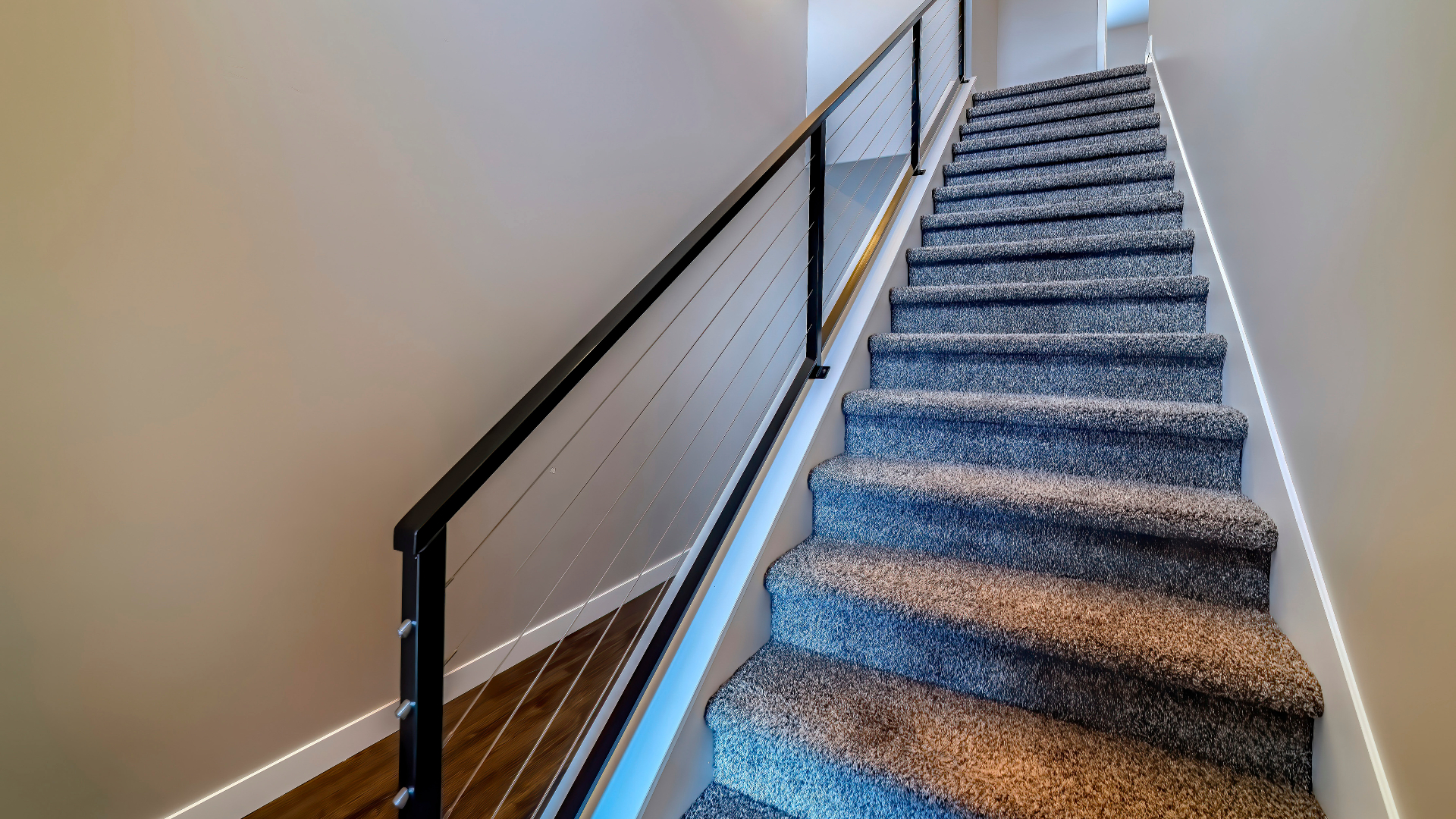
Your staircase sees more foot traffic than almost any other spot in your home. Yet, it’s one of the last places most homeowners think to style. The right carpet can make your stairs much more inviting, cushioning every step, reducing noise throughout the house, and adding a layer of warmth and safety that hardwood or tile simply can’t match. Whether your home is traditional, modern, or somewhere in between, there’s a carpet style that fits.
In this guide, we’ll walk you through everything you need to know about carpeting your stairs. We’ll cover the best carpet materials, popular staircase design styles, and what installation actually looks like when you hire a pro. By the end, you’ll have a clear picture of what works, what to avoid, and where to start.
Why Carpet Is a Great Choice for Stairs
Carpet is one of the most popular choices for stairs, and it’s easy to see why. Here are the benefits of installing carpet on your home’s stairs:
- Safety: The texture gives your feet something to grip, which makes a real difference for kids, older adults, and pets navigating the stairs every day.
- Noise reduction: Carpet absorbs sound with every step, creating a noticeably quieter home, and is a welcome added benefit.
- Comfort: Unlike hard surfaces, carpet has a natural give that makes each step feel softer underfoot, easier on your joints, and warmer in the colder months.
- Versatility: Carpet comes in hundreds of colors, textures, and patterns, complementing virtually any interior style.
- Style: A subtle neutral tone keeps things timeless and classic, while a bold pattern or rich color can turn your staircase into one of the most eye-catching features in your home.
Design Inspiration and Stair Carpet Ideas
Your staircase is one of the first things people notice when they walk through your front door, so it’s worth getting the look right. Here are some of the most popular styles and approaches to help you find a direction that fits your home.
Wall-to-Wall Carpet
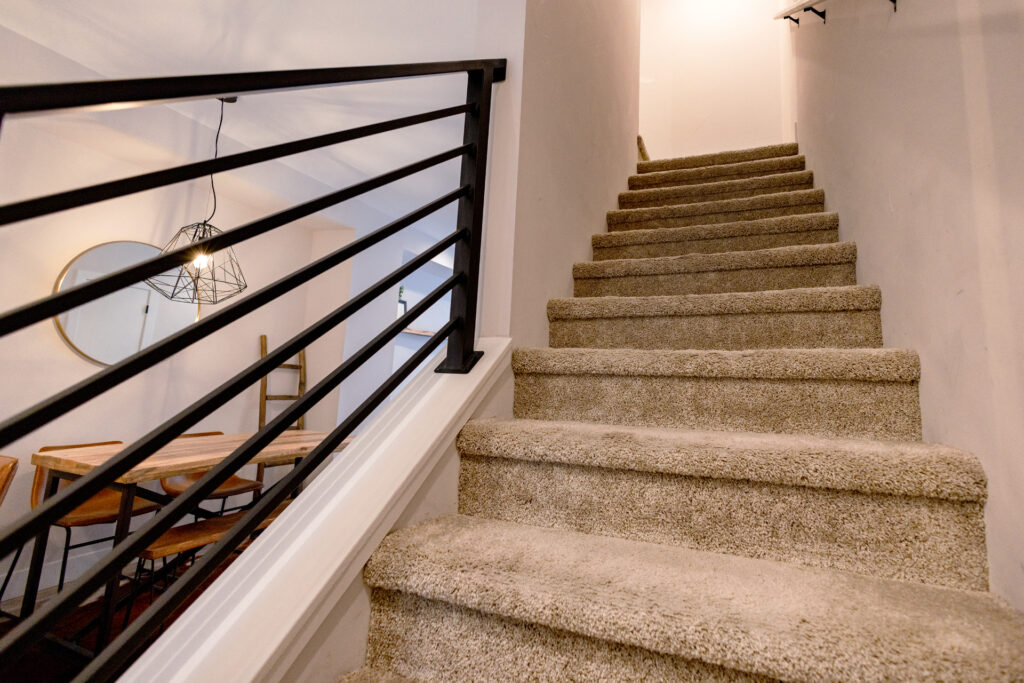
Wall-to-wall carpet covers the full width of each stair, from baseboard to baseboard. It’s the most traditional design approach and creates a seamless look that works especially well in formal or classic interiors. Wall-to-wall carpet works equally well on standard, wide, and narrow staircases, making it one of the most versatile options available. Neutral tones like beige, grey, and warm taupe are popular, but wall-to-wall looks equally good in deeper, richer colors for a more dramatic effect.
Stair Runner Carpet
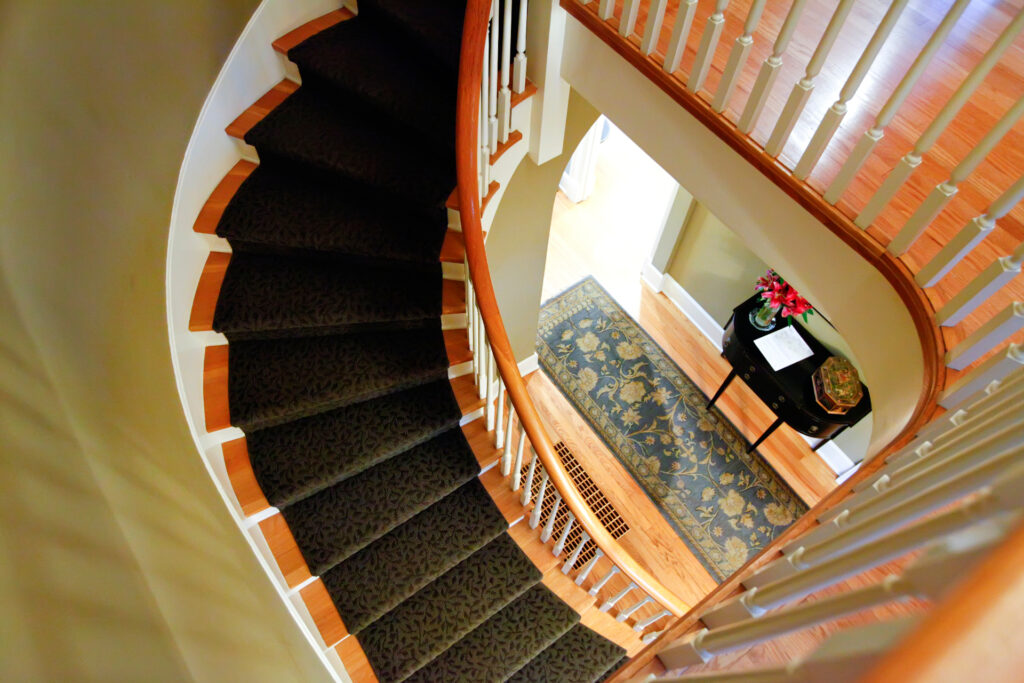
A stair runner is a strip of carpet that runs down the center of the staircase, leaving a band of exposed wood or tile on either side. It combines the warmth and comfort of carpet with the beauty of the floor beneath it. Carpet runners are a great option if you want to incorporate a bold pattern or color, since the exposed edges frame the carpet and give it room to breathe visually. They also offer more flexibility to update your look down the road without a full reinstallation, though precise professional installation is strongly recommended to keep the runner centered and secure.
Bold Patterns and Colors

A bold carpet is one of the easiest ways to make your staircase a memorable focal point. Strong colors, geometric patterns, floral designs, and other less-conventional design choices are all popular for homeowners who want their stairs to feel intentional and designed rather than purely functional. A deep navy, rich emerald, or warm terracotta can add a level of personality that neutral flooring simply can’t. The key is balance. If your staircase is making a statement, keep the surrounding walls and trim relatively simple or complementary so the carpet has room to shine.
Neutral and Natural Tones

Neutral and natural tones are a proven choice that never goes out of fashion. Shades of beige, warm grey, soft taupe, and creamy white work with virtually any interior and give your staircase a clean, cohesive look that lets the rest of your decor do the talking. They’re also practical. Neutral tones are forgiving of wear and easy to coordinate with future updates to your home. When you go neutral, subtle texture becomes the design element, and a well-chosen cut pile or looped runner in a natural tone can add warmth and depth to a space.
Textured Styles

Texture and patterned carpet are one of the most underrated design tools in a room. Textured stair carpet adds visual interest and dimension without relying on bold color or pattern, making it a great middle ground for homeowners who want something more interesting than a flat neutral but less bold than a statement print. Frieze and cut-and-loop styles are the most popular choices, creating a surface that catches light differently depending on the angle. The varied surface also does a great job of disguising everyday wear, footprints, and minor soiling, which is a practical advantage on high-traffic stairs.
Herringbone and Woven Patterns

Herringbone and woven carpet styles have made a strong comeback in recent years, and stairs are one of the best places to use them. The interlocking zigzag of a herringbone pattern adds a sense of detail that few other styles can match, while traditional woven carpets bring a richness that looks genuinely luxurious, making them a natural fit for high-end installations and design-forward homes utilizing striking patterns. They work especially well as stair runners, where the pattern is fully visible and gets the attention it deserves.
Types of Carpet Best Suited for Stairs
The next step is choosing the right materials to bring it to life. Fiber determines how well your carpet holds up to daily foot traffic, how easily it cleans, and how long it stays looking good. Here’s how your options compare.
| Fiber | Durability | Price Point | Softness | Stain Resistance | Pile Type | Best For |
|---|---|---|---|---|---|---|
| Nylon | Excellent | Higher | Good | Good (when treated) | Cut Pile, Cut & Loop | High-traffic stairs, long-term investment |
| Polyester | Moderate | Budget-friendly | Very Good | Excellent (built-in) | Cut Pile, Cut & Loop | Low to moderate traffic, style-focused buyers |
| Triexta (SmartStrand) | Very good | Mid to high | Excellent | Excellent (built-in) | Cut Pile, Cut & Loop | Busy households, kids, pets |
| Wool | Very good | Premium | Good | Good (natural) | Loop Pile, Patterned/Woven | Design-forward homes, high-end installs |
Nylon Carpeted Stairs
Nylon is the most durable carpet fiber you can buy, which makes it a top choice for stairs. It stands up to heavy foot traffic better than any other option, resists matting and crushing over time, and holds its texture and appearance longer than softer fibers. The one trade-off is that stain resistance isn’t built in. Most nylon carpets are treated with a topical protector that works well but can wear down over time and may need to be reapplied.
Polyester Carpeted Stairs
Polyester is one of the most budget-friendly fibers available, and it brings some genuine strengths to the table. It’s naturally soft, holds color exceptionally well, and has excellent built-in stain resistance. The trade-off is durability. Polyester is more prone to matting and crushing in high-traffic areas over time, making it better suited for lighter-traffic staircases rather than the main stairs in a busy home.
Triexta Carpeted Stairs
Triexta is a newer fiber that has quickly built a strong reputation. It offers the softness of polyester with durability closer to nylon, and its built-in stain resistance is part of the fiber itself rather than a topical treatment. The main trade-off is price. Triexta sits in the mid-to-high range, but for busy households with kids or pets, the combination of softness, durability, and permanent stain protection makes it a smart long-term investment.
Wool Carpeted Stairs
Wool is the oldest and most natural carpet fiber available, and it still holds its own against modern synthetics. It’s naturally soil-resistant, remarkably durable, and has a depth of texture and richness that synthetic fibers have a hard time replicating, making it a popular choice for high-end stair runners and design-forward installations. The trade-offs are cost and maintenance. Wool is the most expensive option by a significant margin and is more sensitive to moisture, requiring prompt attention to spills. For homeowners who prioritize aesthetics and are willing to invest in a premium product, though, wool is hard to match.
What To Expect During Installation
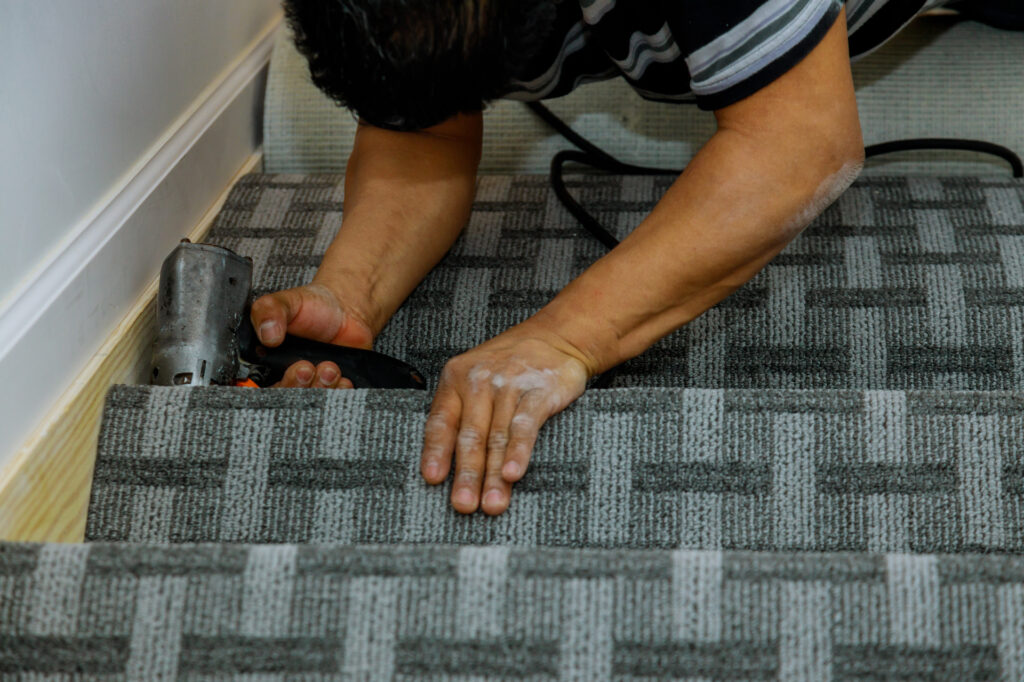
Carpeting stairs is a technical flooring installation. Material for each tread and riser has to be measured, cut, and secured individually, which requires precision and experience that most DIYers underestimate. A poorly installed stair carpet can look uneven, come loose over time, and even create a safety hazard, so this is one job where hiring a professional makes a real difference.
A professional installer will handle everything from removing your old carpet and preparing the subfloor to fitting tack strips, laying good-quality underlay, and securing the finished carpet cleanly around every edge and corner, ensuring it all blends seamlessly. The result is a tight, polished installation that looks better and lasts longer than most DIY attempts. When hiring an installer, it’s worth asking about their experience with stairs specifically, what’s included in the quote, and how they handle repairs if something comes loose down the line.
Your Staircase Is Worth Getting Right
The right carpet can create a beautiful staircase that’s one of the most inviting features in your home. Whether you’re drawn to the durability of nylon, the softness of Triexta, or the timeless elegance of a wool herringbone runner, there’s an option that fits your home, your lifestyle, and your budget.
If you’re in the Woodinville area looking for the perfect stair carpet, the team at Builders Interiors is here to help. Visit one of our showrooms to explore our full carpet selection in person, or reach out today to request a free carpet design consultation. Our flooring experts will walk you through your options and help you find the perfect fit for your staircase.