

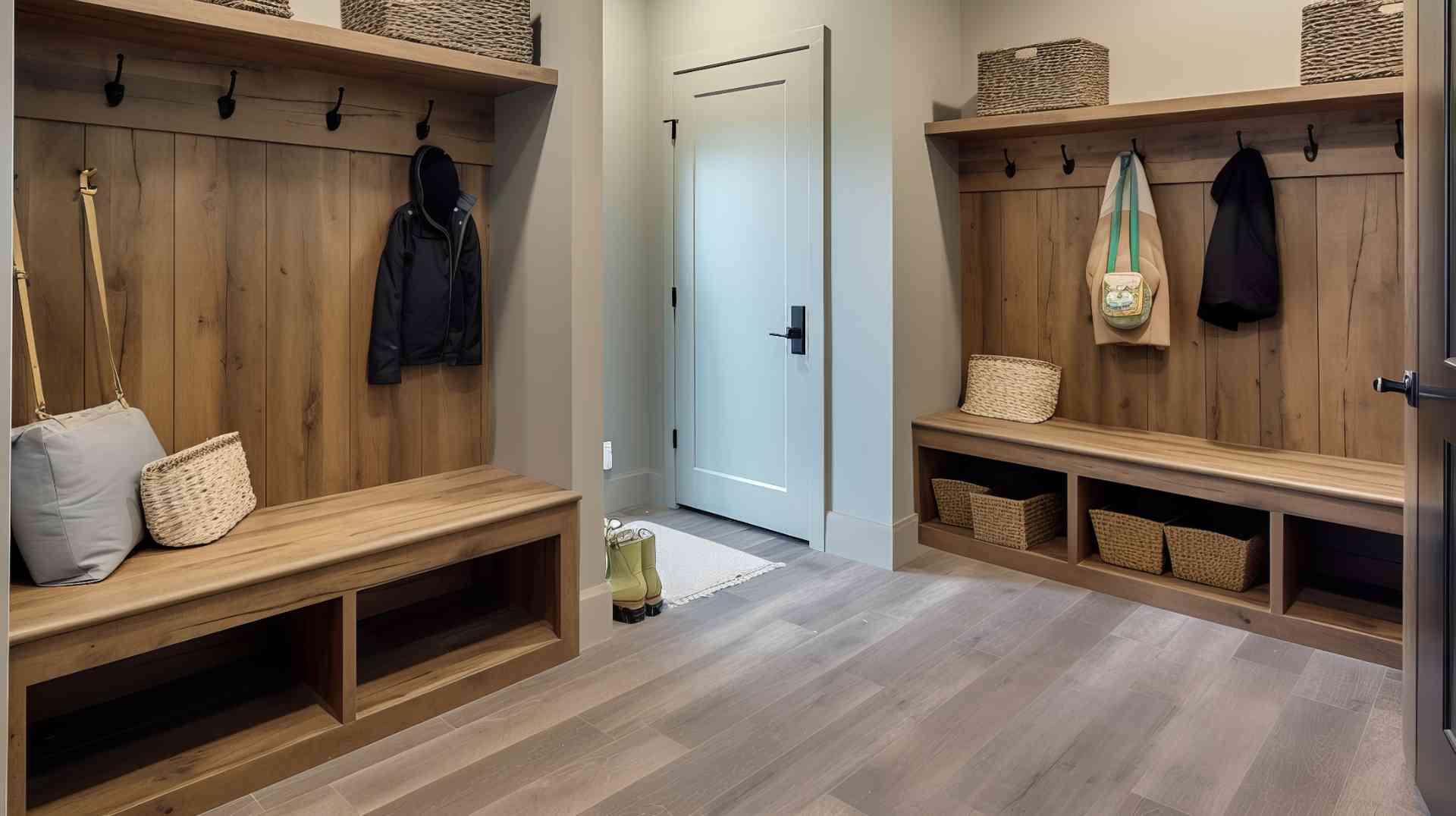
As a functional entryway space, your mudroom is one of the hardest-working spaces in the home. It handles wet shoes, muddy boots, pet traffic, backpacks that never make it to wall hooks, and constant in-and-out movement throughout the day. Because of that, flooring choices that work well in living rooms or bedrooms often fall short in a mudroom.
Flooring in this space should balance durability, water resistance, safety, and comfort while still fitting the overall design of the home. In this guide, we’ll break down what to look for in mudroom flooring, compare the most common material options, and explain which flooring types perform best based on lifestyle, traffic, and maintenance needs.
What to Look for in Mudroom Flooring
Mudrooms sit at the intersection of indoors and outdoors. It takes more abuse than most areas while adding visual interest. Choosing the right material starts with understanding the specific demands of the space and how your household uses it daily.
- Water and moisture resistance: Mudroom floors are exposed to rain, snow, and wet footwear, so materials that resist swelling, warping, and water damage perform best.
- Durability to withstand heavy foot traffic: This space often sees constant foot traffic from family members, guests, pets, and kids, making scratch and impact resistance essential.
- Ease of cleaning and maintenance: Dirt, salt, and debris should be easy to sweep, wipe, or mop without requiring frequent deep cleaning.
- Slip resistance and safety: Textured surfaces and proper finishes help reduce slipping, especially when floors are wet.
- Comfort underfoot: Some flooring materials feel colder or harder than others, which can matter in homes where the mudroom is used often.
- Visual flow with nearby rooms: Mudroom flooring should transition well into adjacent spaces like kitchens, hallways, or laundry rooms to maintain a cohesive look.
- Stain and odor resistance: Mudrooms often deal with pet messes, wet gear, and outdoor debris, so flooring that resists staining and does not trap odors is easier to live with long term.
- Repairability and long-term upkeep: Some flooring options are easier to replace or repair if a section gets damaged, which matters in a high-traffic space.
Tile Flooring for Mudrooms
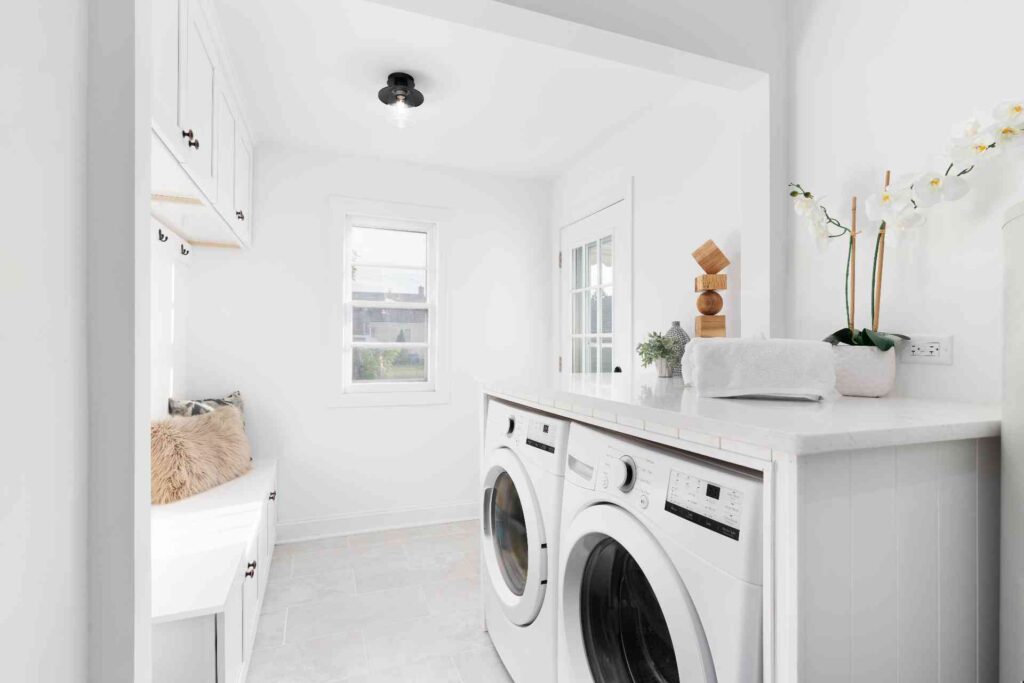
Tile is one of the most reliable flooring choices for mudrooms because it handles moisture, dirt, and heavy traffic better than most materials. When properly installed, tile creates a hard, sealed, non-porous surface that is easy to clean and resistant to daily wear from shoes, pets, and outdoor debris. For homes that deal with frequent rain, snow, or mud, tile often sets the performance standard.
- Porcelain tile is the strongest option for mudrooms. The material is dense, highly water-resistant, and less likely to chip or crack under heavy use. Plus, it performs reliably in all climates, including areas with frequent wet weather.
- Ceramic tile offers many of the same benefits as porcelain at a lower cost, though it is slightly less dense. It works well in mudrooms with moderate traffic and provides a wide range of design options, from classic patterns, like a herringbone pattern, to modern finishes.
Tile flooring excels in durability and water resistance, but it can feel cold and hard underfoot. Adding area rugs or radiant heating can help improve comfort while maintaining tile’s long-term performance benefits.
Luxury Vinyl Flooring for Mudrooms
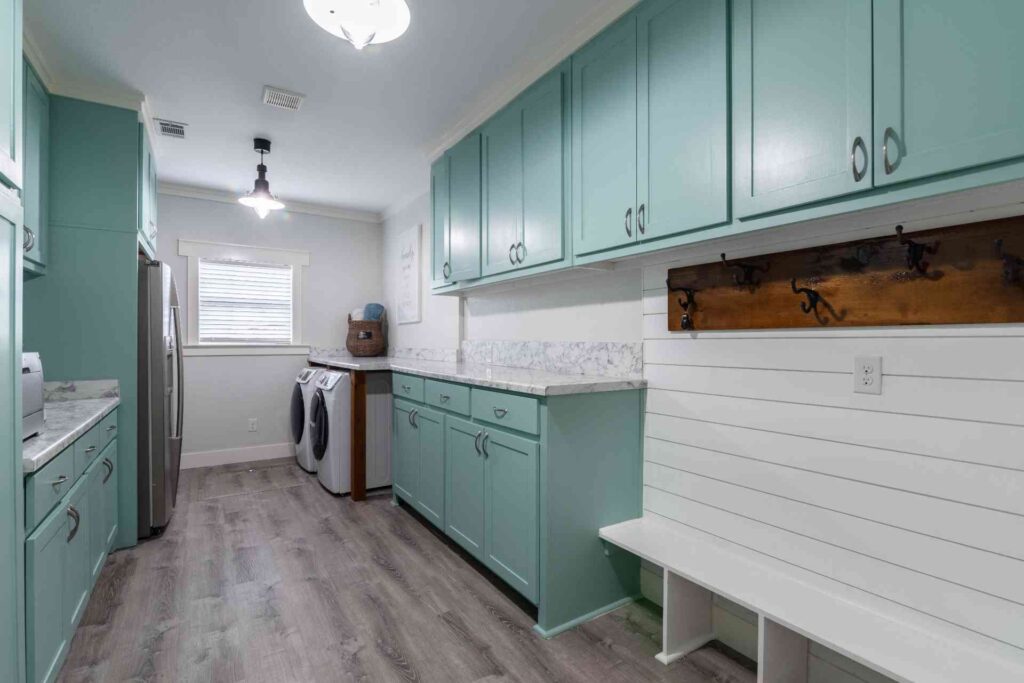
Luxury vinyl flooring has become one of the most popular mudroom flooring ideas because it balances durability, comfort, and water resistance. Modern luxury vinyl can handle moisture, dirt, and heavy foot traffic while offering a softer feel underfoot than tile or stone. This makes it a practical option for busy households that want performance without sacrificing comfort.
- Luxury vinyl plank (LVP) mimics the look of hardwood while offering waterproof construction. It performs well in mudrooms that connect directly to living spaces, allowing for a cohesive look without the moisture concerns associated with real wood. LVP is also resistant to scratches and dents, which is helpful in homes with pets.
- Luxury vinyl tile (LVT) provides the look of stone or ceramic tile with added flexibility and warmth. It is easier to stand on for long periods and typically quieter underfoot, making it a good choice for high-traffic entry areas that are used throughout the day.
Luxury vinyl flooring is easy to clean and generally low maintenance, requiring only regular sweeping and occasional damp mopping. While it does not offer the same long-term lifespan as porcelain tile, its comfort, design flexibility, and water resistance make it one of the most versatile mudroom flooring options available.
Engineered Hardwood in Mudrooms
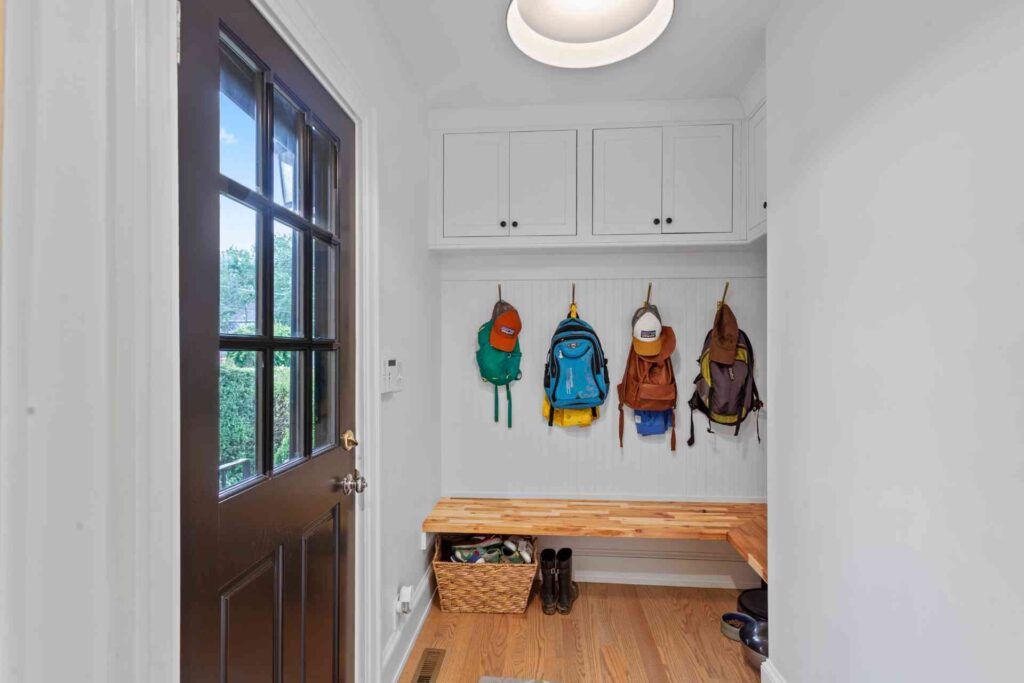
Engineered hardwood can work in a mudroom under the right conditions, but it requires more careful consideration than tile or luxury vinyl. Unlike solid hardwood, engineered wood is built in layers, which gives it greater structural stability and better resistance to changes in humidity. This construction allows it to perform more reliably in moisture-prone areas.
Engineered hardwood offers a warm, natural look that many homeowners want to carry through from adjacent living areas. When used in a mudroom, it creates an inviting atmosphere, but is best suited for households with lighter traffic, consistent cleaning habits, and good moisture control. Entry mats, proper ventilation, and prompt cleanup of water are essential for protecting the floor.
While engineered hardwood can handle occasional moisture exposure, it is not fully waterproof. Standing water, repeated wet shoes, or snow buildup can lead to damage over time. For homes with heavy mudroom use, pets, or frequent wet conditions, engineered hardwood is usually better reserved for nearby rooms rather than the mudroom itself.
Laminate Flooring for Mudrooms
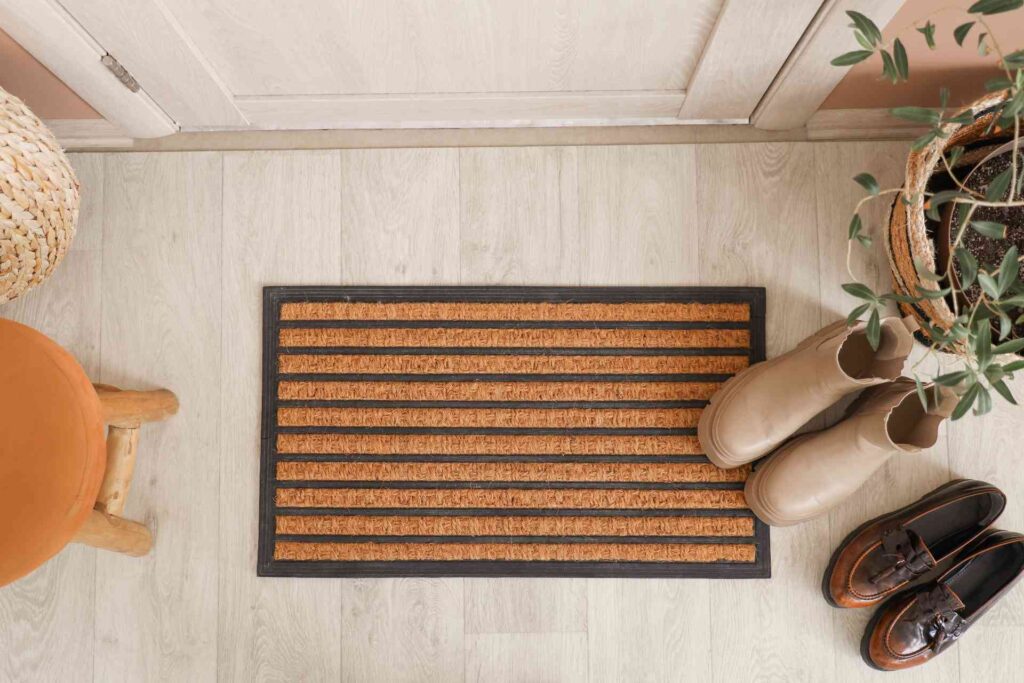
Laminate flooring has improved significantly in recent years, making it a more viable option for mudrooms than it once was. Many modern laminate products now feature enhanced water resistance and durable wear layers that help protect against scratches, scuffs, and everyday dirt.
Laminate performs best in mudrooms that see moderate traffic and limited standing water. It offers a comfortable feel underfoot and can convincingly replicate the look of wood or stone at a lower price point. For homeowners looking to coordinate flooring between the mudroom and nearby living spaces, laminate can provide a visually consistent solution.
Despite these improvements, laminate is still more vulnerable to moisture than tile or luxury vinyl. Water that seeps into seams can cause swelling over time, especially in entry-heavy homes or wet climates. Laminate works best when paired with quality mats, regular cleaning, and a household routine that minimizes moisture exposure.
Stone and Concrete-Inspired Flooring Options
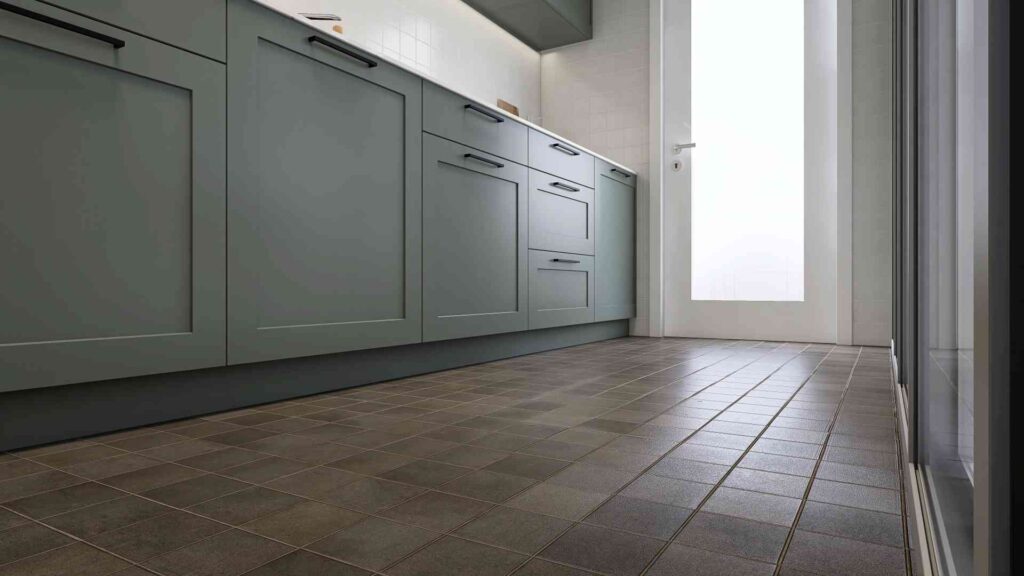
Stone and concrete-inspired flooring is a popular choice for mudrooms thanks to its durability and traction that’s grounded in a practical aesthetic. These looks are most commonly achieved using porcelain tile, which delivers the appearance of natural materials without the maintenance that real stone or concrete requires in a high-use entry space.
- Slate-look tile is one of the most practical stone-inspired options for mudrooms. Its natural texture helps improve slip resistance, and the layered appearance does a good job of hiding dirt and debris. Porcelain slate-look tile performs especially well in wet climates.
- Limestone-look tile offers a softer, more understated stone appearance. Porcelain versions provide the visual warmth of limestone while maintaining strong moisture resistance and easier upkeep, making them suitable for mudrooms that connect to kitchens or hallways.
- Marble-look tile delivers a clean, refined appearance without the staining and etching concerns of real marble. Porcelain marble-look tile works well in mudrooms where homeowners want a polished look but still need reliable durability.
- Concrete-look tile creates a modern, minimalist feel that suits contemporary and industrial-style homes. Porcelain and luxury vinyl versions provide the visual appeal of concrete with better comfort underfoot and fewer long-term maintenance concerns.
Stone and concrete-inspired flooring options work best in mudrooms where durability and moisture resistance are priorities. These materials perform well under heavy use while offering a timeless look that integrates easily with a variety of home styles.
Slip-Resistant and Safety Considerations
Mudroom flooring is frequently exposed to water, snow, and debris, which increases the risk of slipping if the surface is not properly suited for wet conditions. Choosing flooring with built-in traction and safety features helps reduce accidents while keeping the space functional and comfortable for everyday use.
- Surface texture and finish: Textured and matte finishes provide better traction than polished or smooth surfaces, especially when floors are wet.
- Slip-resistant ratings: Many tile and stone-look products are designed for wet environments and offer slip-resistant performance suitable for entry spaces.
- Grout and seam placement: Additional grout lines or seams can improve traction and help disguise dirt and moisture.
- Pet- and kid-friendly grip: Flooring that offers stability underfoot is especially important in homes with pets or young children.
- Comfort and shock absorption: Softer materials, such as luxury vinyl, can reduce fatigue and offer a safer surface if slips occur.
- Use of entry mats and runners: Mats placed near doors help manage moisture and protect flooring while improving overall safety.
Mudroom Flooring Maintenance and Longevity
Mudroom flooring is exposed to more dirt, moisture, and wear than most areas of the home, so maintenance requirements and long-term performance should factor into the decision. Some materials hold up well with minimal care, while others require more attention to maintain their appearance and structural integrity.
- Daily and seasonal cleaning needs: Tile and luxury vinyl are easy to sweep and mop, while natural stone may require more careful cleaning to avoid surface damage.
- Moisture and stain resistance over time: Waterproof and non-porous materials tend to age better in mudrooms, especially in wet climates.
- Wear and surface durability: Flooring with strong wear layers or dense construction is less likely to show scratches, chips, or dulling.
- Repair and replacement considerations: Plank and tile formats allow for easier spot repairs compared to broad, continuous surfaces.
- Maintenance frequency: Some floors need only basic cleaning, while others may require sealing or resealing to maintain performance.
- Expected lifespan: Porcelain tile typically lasts the longest, followed by luxury vinyl and laminate, with natural stone longevity depending on maintenance.
Matching Mudroom Flooring to Your Home’s Design
Mudroom flooring should function well on its own while also fitting naturally with the rest of the home. Because mudrooms often connect to kitchens, hallways, or laundry rooms, flooring choices play a role in maintaining visual consistency and flow between spaces.
- Coordinating with adjacent rooms: Choosing flooring that complements nearby materials helps prevent the mudroom from feeling disconnected from the rest of the home.
- Light versus dark flooring: Lighter floors can make small mudrooms feel more open, while darker options help conceal dirt and scuffs in high-use spaces.
- Wood-look versus stone-look styles: Wood-look flooring creates warmth and continuity, while stone-look options emphasize durability and practicality.
- Modern, farmhouse, and traditional styles: Concrete-look and large-format tile suit modern homes, while stone and wood-look materials work well in farmhouse and traditional designs.
- Pattern and layout choices: Tile size, plank direction, and pattern can influence how large or balanced the mudroom feels.
- Finish and texture consistency: Matching finishes and surface textures helps create a cohesive, intentional design.
- Thresholds and transitions: Clean, well-planned transitions between flooring types improve durability and create a polished look.
- Natural and artificial lighting: Flooring color and texture can appear different depending on light levels, which affects both appearance and dirt visibility.
Choosing the Right Mudroom Flooring With Confidence
Selecting the best mudroom flooring comes down to balancing durability, moisture resistance, safety, and design. Tile and luxury vinyl mudrooms remain the most reliable choices for high-traffic areas, while engineered hardwood and laminate can work in more controlled environments. Understanding how each material performs helps homeowners avoid costly mistakes and choose flooring that holds up to daily use.
For Woodinville and Seattle-area homeowners, seeing flooring options in person makes the decision process easier. Visiting a showroom allows you to compare materials, textures, and finishes side by side and get guidance based on how your mudroom is actually used. Builders Interiors offers expert support, a wide selection of mudroom-ready flooring, and free consultations to help you choose the right solution for your home.
Visit the Builders Interiors showroom or schedule a free consultation to explore highly durable mudroom flooring options designed to handle real-life wear while complementing your home’s style.