

The Vinyl Plank Flooring Guide: Everything Homeowners Need to Know
Vinyl plank flooring has become one of the most popular flooring choices for homeowners, and the reasons hold up on closer examination. It delivers the warmth and character of hardwood floors without the susceptibility to moisture, the refinishing requirements, or the premium cost. It’s waterproof where hardwood and laminate aren’t, more comfortable to walk on than ceramic tile, and versatile enough to work across almost every room in a house. Unlike older sheet vinyl products, today’s vinyl plank flooring uses a layered construction with realistic printed design layers that closely replicate the look of natural wood and stone.
What takes more work to understand is how to choose the right one. Vinyl plank flooring spans several quality tiers, and the differences between them are significant. This guide covers everything you need to make a confident selection. You’ll find guidance on how to set a realistic budget, how the different types of vinyl plank flooring compare, what wear layers tell you about durability and price, how to choose color, pattern, and finish, how to match vinyl flooring to specific rooms in your home, and what to think through before installation begins.
What Is Vinyl Plank Flooring?
Vinyl plank flooring is a synthetic flooring material built from polyvinyl chloride (PVC), the same durable, moisture-resistant polymer used across a wide range of construction and consumer products. In flooring, PVC is engineered into multiple compressed layers that combine structural rigidity with a realistic surface appearance. It’s that layered construction that separates vinyl from older sheet vinyl products, giving it the durability and realism that have made it one of the most widely installed flooring types available today.
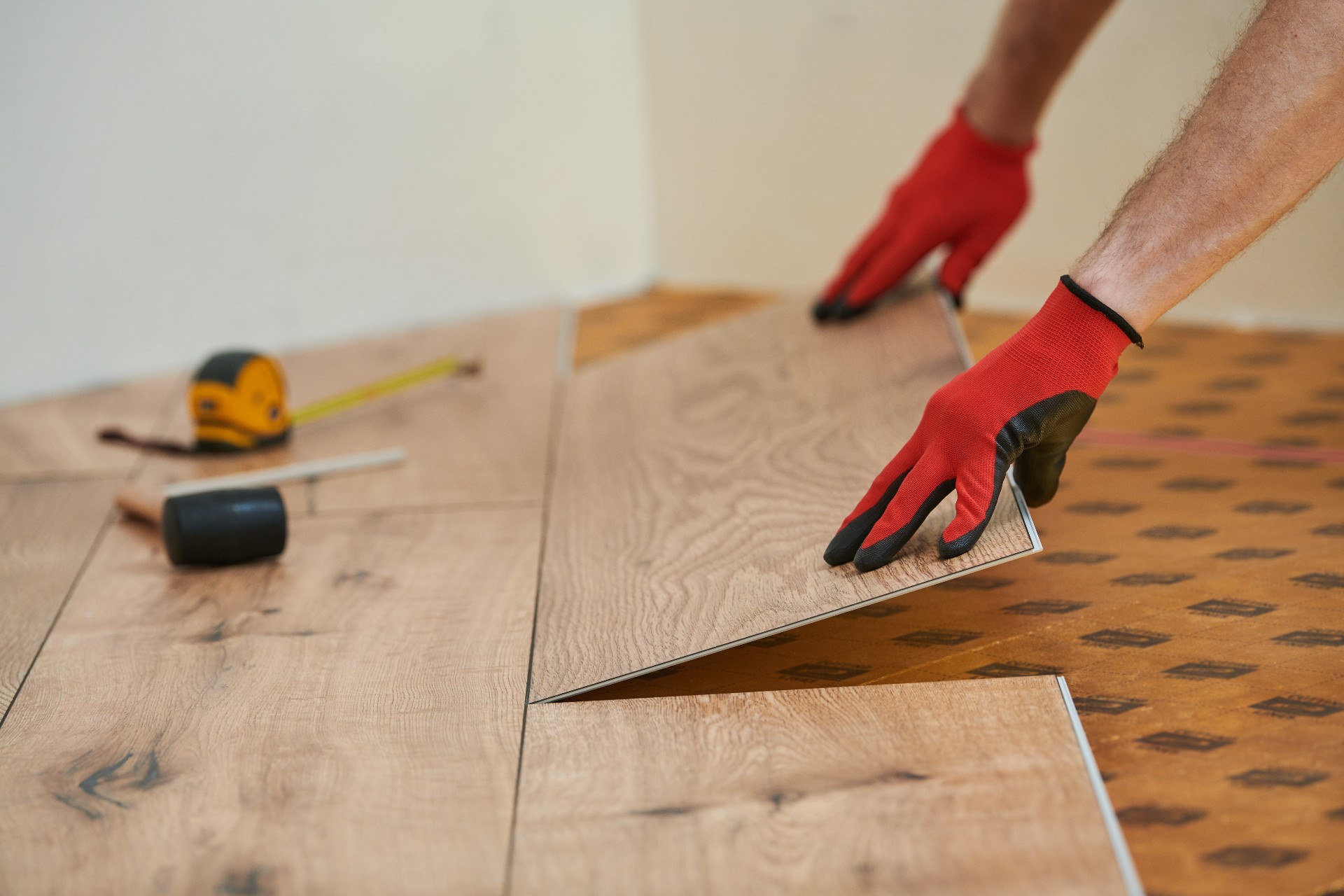
Vinyl plank flooring comes in two formats: planks, which replicate the look of hardwood boards, and tiles, which replicate the look of stone or ceramic tile. Most products have four layers, and each layer plays a distinct role in how the floor performs:
- A backing layer that provides stability. Some products also have a built-in underlayment, a thin layer of foam, felt, or rubber for sound reduction and added comfort.
- A rigid core that gives the floor stability and helps it resist dents
- A printed design layer that replicates the appearance of natural wood or stone
- A clear wear layer to protect the design layer from scratches, stains, and daily traffic demands
Comparing Vinyl vs. Luxury Vinyl Plank Flooring
Vinyl plank flooring is a broad category that spans several quality tiers, and the differences between them are significant enough to affect how a floor performs, how long it lasts, and what it costs. Luxury vinyl plank, or LVP flooring, is the premium tier within that category and what most homeowners researching new flooring should be considering. It is also the only product Builders Interiors carries. Everything covered in this guide refers to LVP unless otherwise noted.
| Standard Vinyl Plank | Luxury Vinyl Plank | |
|---|---|---|
| Core | Flexible PVC core; can shift, expand, and contract more than rigid core products | Rigid core; highly dimensionally stable |
| Wear layer | Typically 6 mils (thousandth of an inch) or less | 12 mil to 22 mil or higher |
| Thickness | Thinner overall profile | Thicker overall profile |
| Durability | Suited to light traffic | Built for long-term residential performance |
| Realism | Basic printed design layer | Advanced printing with embossed or registered embossed texture |
| Waterproofing | Water-resistant in some products | Fully waterproof at the plank level |
| Price | $1 to $3 per square foot | $2 to $10 per square foot |
| Best for | Budget installations, light-traffic spaces, short-term use | Whole-home installations where durability and appearance both matter |
How Much Does Vinyl Plank Flooring Cost?
Vinyl plank flooring is one of the more accessible renovation project flooring options available. Material costs for LVP run roughly $2 to $10 per square foot, depending on wear layer thickness, core construction, and quality tier. The low end of that range gets you a functional floor for light-traffic spaces. The high end reflects thicker wear layers, denser cores, and more realistic surface finishes that hold their appearance longer and perform better under sustained use.
Understanding what drives price within the LVP category helps you find the right balance between upfront spend and long-term value. Three factors determine where a luxury vinyl plank floor lands on the price scale: wear layer thickness, core construction, and the product warranty.
Wear Layer Thickness
The wear layer is the clear protective coating that sits above the printed design layer in every LVP product. It absorbs daily foot traffic, furniture movement, pet claws, dropped objects, and stains. Its thickness, measured in mils (thousandths of an inch), is the most direct indicator of how long a floor will hold up against daily wear and tear before showing visible signs of use.
- A 12 mil wear layer suits light to moderate traffic and performs well in bedrooms and guest rooms, but will show wear sooner in the high traffic areas of a busy household.
- A 20 mil wear layer is the most widely used specification for residential LVP installations, handling living rooms, kitchens, and hallways reliably and offering the best balance of cost and durability for most homes.
- At 22 mil, the wear layer is built for the most demanding conditions: homes with pets, children, heavy furniture, or spaces that see near-commercial levels of foot traffic.
Core Construction
The core is the structural layer that gives LVP its rigidity and dimensional stability.
- Stone plastic composite (SPC) cores are denser and more dimensionally stable, making them a strong choice for rooms that experience temperature swings, for installation over concrete, and for spaces where subfloor imperfections are a concern.
- Wood plastic composite (WPC) cores are typically thicker and incorporate a foamed polymer layer that produces a softer, warmer feel underfoot and better sound dampening than a standard rigid core or SPC floor.
Stone plastic composite tends to cost slightly less at comparable wear layer thicknesses, while WPC commands a modest premium for the added comfort and quieter feel. Both are fully waterproof at the plank level, but SPC’s denser construction provides somewhat better resistance to moisture working beneath the floor over time.
Installation Costs
Professional installation typically runs $2 to $5 per square foot for labor. However, additional costs for underlayment, removing the existing flooring, and subfloor repair bring the total installed cost for most LVP projects to $4 to $15 per square foot, depending on material quality and project complexity.
Product Warranty
Manufacturers back higher-quality LVP products with longer warranties on residential products with thicker wear layers. A longer warranty on a more expensive floor is a practical signal of how the manufacturer rates its own product’s long-term durability. Comparing warranty terms across options gives you a quick, reliable benchmark for total value that goes well beyond the per-square-foot price.
Types of Vinyl Plank Flooring
Not all vinyl plank flooring is built the same way. Three variables determine what type of LVP you’re buying and how it will perform in a given space:
- What the core is made of
- The product’s shape (plank or tile)
- How it attaches to the subfloor
Core Construction
There are two primary rigid core constructions in LVP, and the difference between them affects feel, performance in specific conditions, and price.
| Core Type | Feel/Stability | Best For | Trade-off |
|---|---|---|---|
| Stone Plastic Composite | Firm and rigid with strong dimensional stability; resists expansion and contraction better than other LVP types | High-traffic rooms, spaces with temperature fluctuations, installation over radiant heat, and below-grade installations over concrete | Harder underfoot than WPC; a separate underlayment is worth considering for added comfort in living areas and bedrooms |
| Wood Plastic Composite | Softer and warmer underfoot than SPC, with better built-in sound dampening from the foamed polymer core; typically thicker overall | Bedrooms, living rooms, and spaces where comfort underfoot is a priority alongside durability | Slightly less dimensionally stable than SPC; not always recommended for installation over radiant heat systems |
Shape
Luxury vinyl comes in two shapes. The core construction, wear layer options, and installation methods are identical across both formats.
| Format | Appearance | Best For | Trade-off |
|---|---|---|---|
| Plank | Sized and proportioned to replicate hardwood boards; available in a range of widths and lengths | Whole-room residential installations, living areas, bedrooms, and any space where a wood-look floor is the goal | Plank layouts can emphasize directionality in irregular or narrow rooms if not planned carefully |
| Tile | Square or rectangular format sized to replicate the look of stone, ceramic, or porcelain tile | Bathrooms, kitchens, and entryways where a tile appearance is the goal without the cold surface, grout maintenance, or installation complexity of genuine tile | Grout-line visuals are printed rather than dimensional, which reads differently up close than actual tile or stone |
Installation Method
Most residential LVP installations use a click-lock floating system, but glue-down is an option worth understanding, depending on the space and conditions.
| Installation Method | Stability/Profile | Best For | Trade-off |
|---|---|---|---|
| Floating click-lock | Installs as a floating floor without adhesive; planks lock together and can flex slightly over minor subfloor imperfections | Most residential rooms; a key advantage is the ability to repair or replace a damaged plank without removing the entire floor | Requires a reasonably flat subfloor; expansion gaps at walls must be maintained; not suited to spaces with heavy rolling loads |
| Glue-down | Permanently bonded to the subfloor using adhesive for maximum stability; no floating movement and a lower overall profile | High-traffic areas, large open spaces, and installations where a thinner floor profile is needed | Replacing a damaged plank requires significantly more effort than with a floating floor; the adhesive demands a clean, flat subfloor for proper bonding |
How to Choose Vinyl Plank Color, Pattern, and Finish
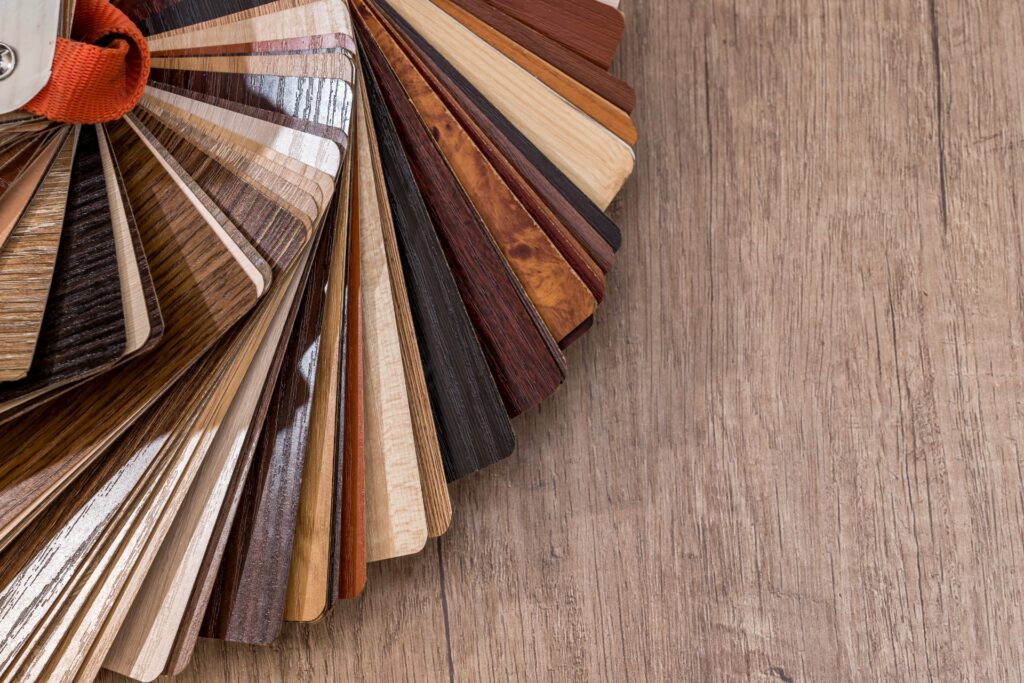
Once the core type and wear layer are settled, color, pattern, and finish are where LVP selection becomes personal. The right choices depend on the room’s light, its size, how much visual interest you want the floor to carry, and how much maintenance you’re prepared to manage day to day.
- Format dimensions. For plank, wide and long boards emphasize grain detail and create a more open, continuous look, particularly in larger rooms. Standard widths sit better in smaller spaces where oversized formats can overwhelm the room. For tile, larger formats read as more contemporary in open spaces; smaller formats suit tighter rooms and allow for more intricate layouts.
- Layout and pattern. Straight lay is the standard for both planks and tile and works in most rooms without drawing attention to the installation. Herringbone adds visual complexity and works well in entryways, kitchens, and dining areas. Multi-width combinations closely mimic the randomness of genuine hardwood, and a diagonal or offset pattern achieves a similar effect with tile. Any layout other than a straight lay requires more cuts and generates more waste, worth factoring into your budget from the start.
- Finish type. A matte finish hides smudges, footprints, and minor scratches most effectively and closely mimics the appearance of natural wood or stone. A low-gloss finish adds subtle depth without the upkeep demands of high gloss. For most households, matte or low gloss is the more practical choice.
- Texture and realism. Embossed texture adds a raised pattern that gives the floor a tactile, natural quality underfoot. Registered embossed that texture precisely with the printed design layer beneath it, producing a noticeably more realistic result in both wood and stone-look LVP products. If visual authenticity is a priority, it’s the specification worth looking for.
- Color and light. Light tones make rooms feel more open but show dust and pet hair more readily. Dark tones add warmth but can make smaller rooms feel enclosed. Mid-tone neutrals work across more lighting conditions and coordinate more easily with existing furniture and fixed elements. Whatever color range you’re considering, bring a physical sample home before committing. Colors that appear neutral in a showroom can shift considerably under the specific lighting in your space.
The Best Vinyl Plank Flooring for Every Room in Your Home
Luxury vinyl plank performs well across more rooms than almost any other flooring type, but the right specification changes depending on how a room is used and how many people walk through it on a daily basis.
| Room | Recommended Type | Why It Works |
|---|---|---|
| Kitchen | Waterproof SPC, 20 mil wear layer; tile | Spills, humidity, and concentrated foot traffic are constant in kitchens. SPC’s rigid core handles the weight of appliances without shifting, and a 20 mil wear layer handles the daily demands of a high traffic zone reliably. Tile format delivers the look of stone or ceramic without the cold surface or grout maintenance of genuine tile. |
| Bathroom | Waterproof SPC, 20 mil wear layer; tile | Full waterproof construction handles humidity and standing water that would damage laminate or warp hardwood. Tile format delivers the look of stone or ceramic without the installation complexity, cold surface, or grout upkeep. |
| Basement | Waterproof SPC, 20 mil or higher; plank | Below-grade spaces are the most moisture-prone rooms in a house. SPC’s stone composite core won’t swell or buckle if moisture migrates up through a concrete slab, making it the most reliable choice for basement renovation projects. |
| Living and family room | SPC or WPC, 20 mil wear layer; plank | Living rooms are where a wood-look floor typically does its best work, and plank format suits the scale of most living spaces. WPC is a reasonable choice where comfort underfoot is a priority, and the room doesn’t experience significant temperature swings. |
| Primary bedroom | WPC or SPC, 12 to 20 mil wear layer; plank | Bedrooms are among the most natural applications for a wood-look plank floor. Lower traffic means durability requirements are less demanding, and WPC’s softer feel and built-in sound dampening work well in sleeping areas. |
| Guest bedroom | SPC or WPC, 12 mil wear layer; plank | Infrequent use makes a thicker wear layer unnecessary for most households. A 12 mil plank product in a style that coordinates with adjacent spaces is a practical, cost-effective choice. |
| Home office | SPC, 20 mil wear layer; plank | Rolling chair traffic creates concentrated, repetitive wear that softer flooring types don’t handle as well over time. A dense SPC core with a 20 mil wear layer resists the dents and track patterns that develop in lower-quality products. |
| Hallways and entryways | SPC, 20 to 22 mil wear layer; tile | Entry points concentrate the hardest wear in a home: grit, moisture tracked in from outside, and near-constant foot traffic. Tile format works particularly well in entryways where a stone or ceramic look anchors the transition into the home. |
| Laundry room | Waterproof SPC; plank | Washing machine leaks and persistent humidity make full waterproof construction essential. LVP handles moisture far better than laminate in this space, and its resilient surface stands up to the weight and movement of heavy appliances without denting or shifting. |
What to Consider Before Installing Vinyl Plank Flooring
A smooth installation starts with preparation on your end. The table below covers the questions your installer will ask and what you should have sorted before the crew arrives.
| Consideration | What to Know |
|---|---|
| Have you confirmed your core type, wear layer, and format? | SPC, WPC, plank, and tile each have different performance profiles, and wear layer thickness affects both durability and price. Confirming these before scheduling ensures your installer can provide an accurate quote and recommend the right installation approach for your specific LVP product. |
| What is the condition and flatness of your subfloor? | LVP has stricter flatness tolerances than most flooring types. High spots, dips, or soft areas need to be addressed before installation begins. Floating click-lock products are more forgiving of minor imperfections than glue-down, but neither handles significant unevenness without prep work. Ask your installer about subfloor assessment as part of the project scope. |
| Has the subfloor been tested for moisture? | Moisture migrating up through a concrete slab can work beneath floating planks over time or compromise the adhesive bond in glue-down installations. If you’re installing LVP over concrete, particularly in a basement or below-grade space, discuss moisture testing with your installer before scheduling. |
| Does your product require underlayment, or is it built in? | Some LVP products include an underlayment attached to the backing layer. Others require it to be purchased and installed separately. Using an additional underlayment on a product that already has one built in can void the manufacturer’s warranty, so confirm what your specific product requires before the job starts. |
| Does your product require acclimation before installation? | Some LVP products need time to adjust to the temperature and humidity of the room before installation begins. Requirements vary by product and manufacturer. Check the installation guidelines for your specific floor and plan accordingly so acclimation time doesn’t delay your project. |
| Are you installing over radiant heat? | Not all LVP products are rated for use over radiant heat systems. SPC is generally more compatible with radiant heat than a WPC floor. Confirm that the product you’ve selected carries the appropriate rating for your specific system before installation is scheduled. |
| Does the space experience significant temperature swings? | LVP expands and contracts with temperature changes. Rooms that are not consistently climate-controlled, including sunrooms, enclosed porches, and spaces adjacent to exterior doors, require products with strong dimensional stability and properly maintained expansion gaps at all walls. |
| Will the floor height affect door clearances or appliance fits? | LVP adds height to the subfloor, which can affect how doors swing, how appliances like dishwashers sit under counters, and how the floor transitions to adjacent rooms. Walk through the space with your installer beforehand to identify any clearance issues that need to be resolved before installation day. |
| Are transition strips needed between rooms? | Where LVP meets another flooring type, a different floor elevation, or an expansion gap at a doorway, transition strips are required. The right profile depends on the height difference and the adjacent flooring material. Confirm the transition plan with your installer before the job starts so the correct profiles are on hand. |
| If you’re choosing glue-down installation, have you confirmed adhesive compatibility? | Glue-down LVP requires an adhesive that is compatible with both the product and the subfloor material. Not all adhesives work across all subfloor types, and using the wrong one can affect bond strength and long-term stability. Your installer should confirm the right adhesive for your specific product and subfloor before the job begins. |
Ready to Find the Right Vinyl Plank Flooring for Your Home?
Choosing the right LVP comes down to matching core construction, wear layer, and design to how your household actually lives and what each room needs to withstand. The options covered in this guide each have a place, and the right one depends on the traffic, the conditions, and the priorities of the people using the space.
Builders Interiors carries luxury vinyl plank flooring from some of the most trusted names in the industry, including COREtec, Engineered Floors, Evoke, Flooring2, Mohawk, and Provenza, with options spanning every wear layer thickness, core type, and style.
Visit our showroom in Woodinville to see and feel samples in person, or schedule a free design consultation with one of our flooring experts. We serve homeowners throughout the greater Seattle area and are happy to help you find the right floor for your home.